Korean starts to look different when you can see the letters inside each Hangul syllable block. Loquus brings writing references, word audio, lessons, and grammar into your practice. Give yourself time to read a word, hear it, and understand the sentence around it before moving on.
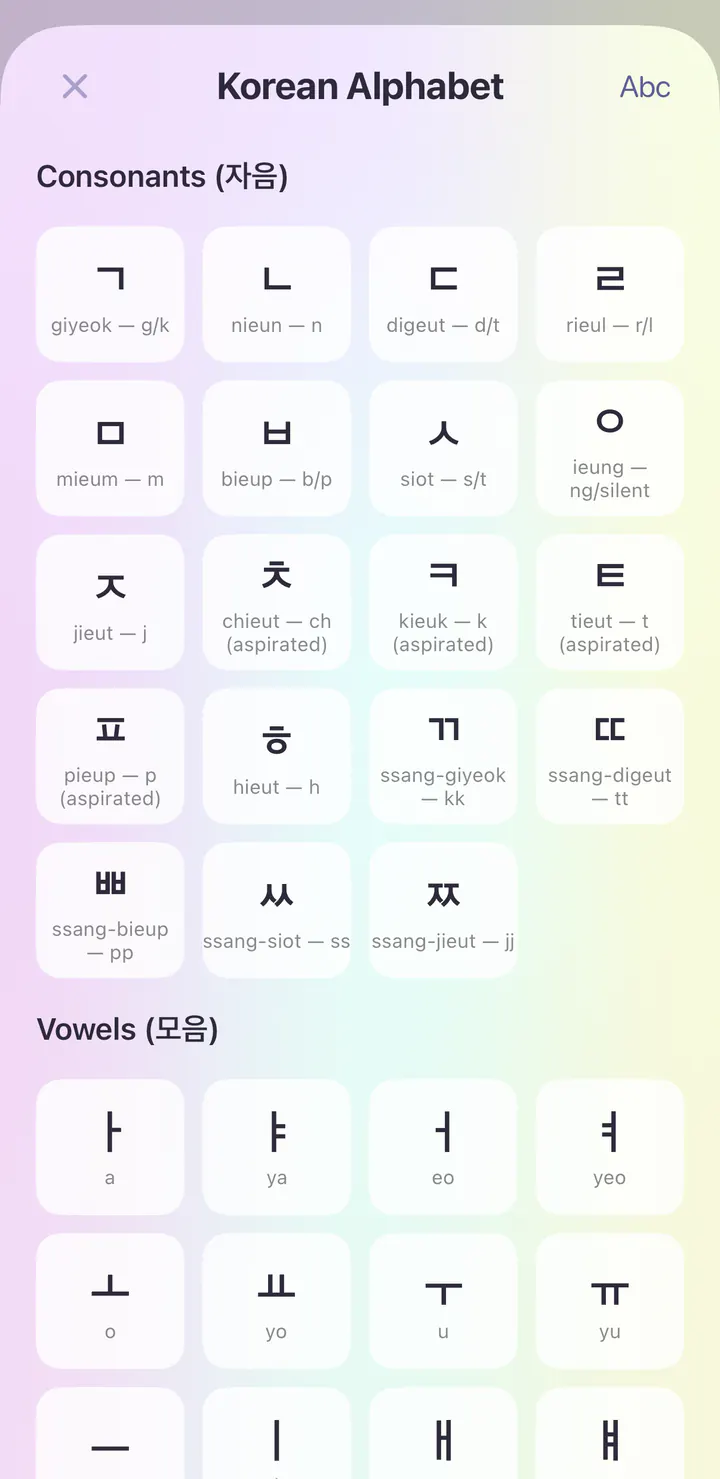
Hangul letters are arranged in syllable blocks rather than written as one long row of separate letters. Explore the alphabet reference and listen to its examples. As you learn a word, pay attention to its letters and the way they come together in the spoken form.
02
Pay attention to the ending
A Korean sentence ending can carry information about politeness and what the speaker is doing. Grammar Center gives you a place to look up those patterns and compare examples. Read a complete reply before focusing on a single ending, keeping the situation and listener in mind.
03
Listen again before replying
Spelling and sound do not always line up exactly when Korean sounds meet inside a word or phrase. Use available slow playback to take another listen. Practice with a lesson or guided exchange, then return to the Dictionary when a word needs a closer look.
35
Chapters on your journey
61
Grammar Center topics
56
Authored conversations
See it in the app
The Korean course, on iPhone.
Real screens from the first day of the Korean course in the iPhone app.
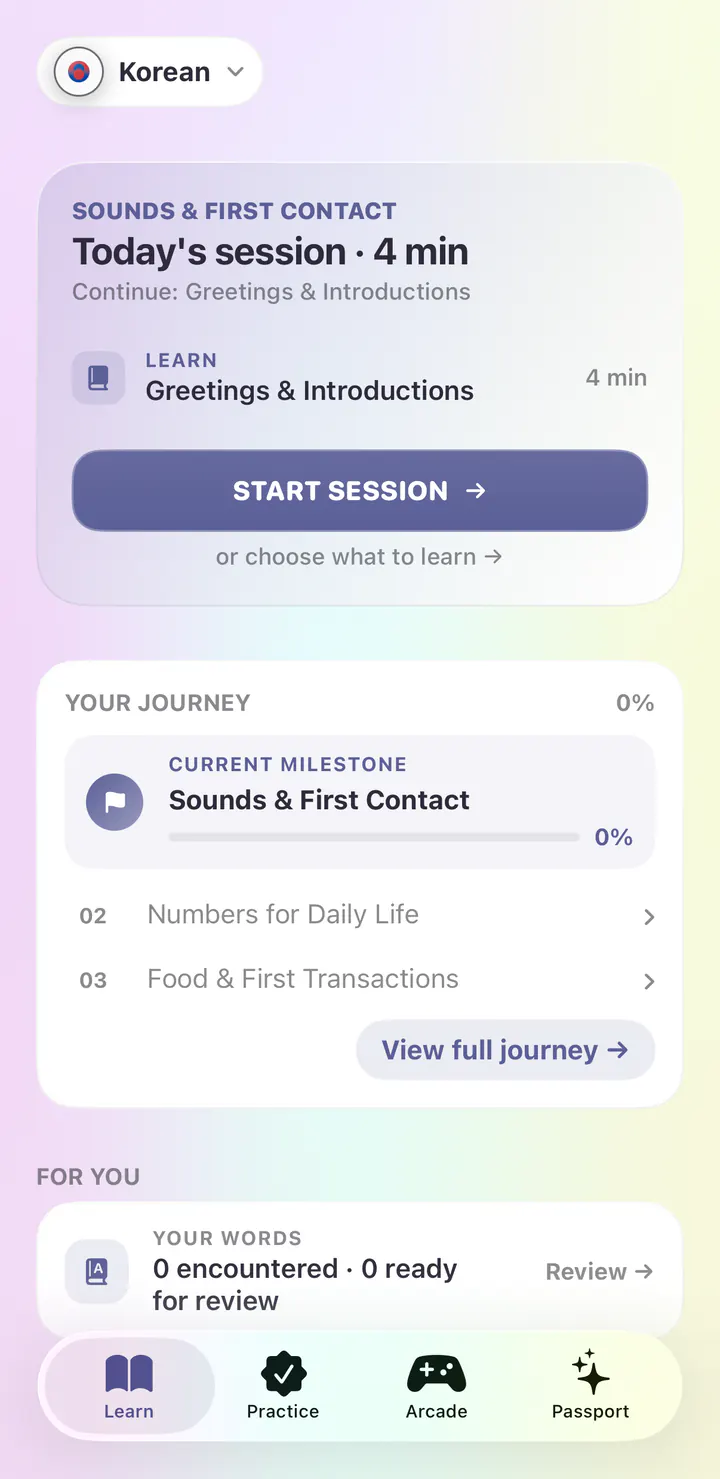
Your first session is ready.
Open the app and today’s session is waiting. The Korean course begins with Sounds & First Contact, and the first lesson is Greetings & Introductions.
A short session, planned for you
Your journey and next milestone below
Or choose any lesson yourself
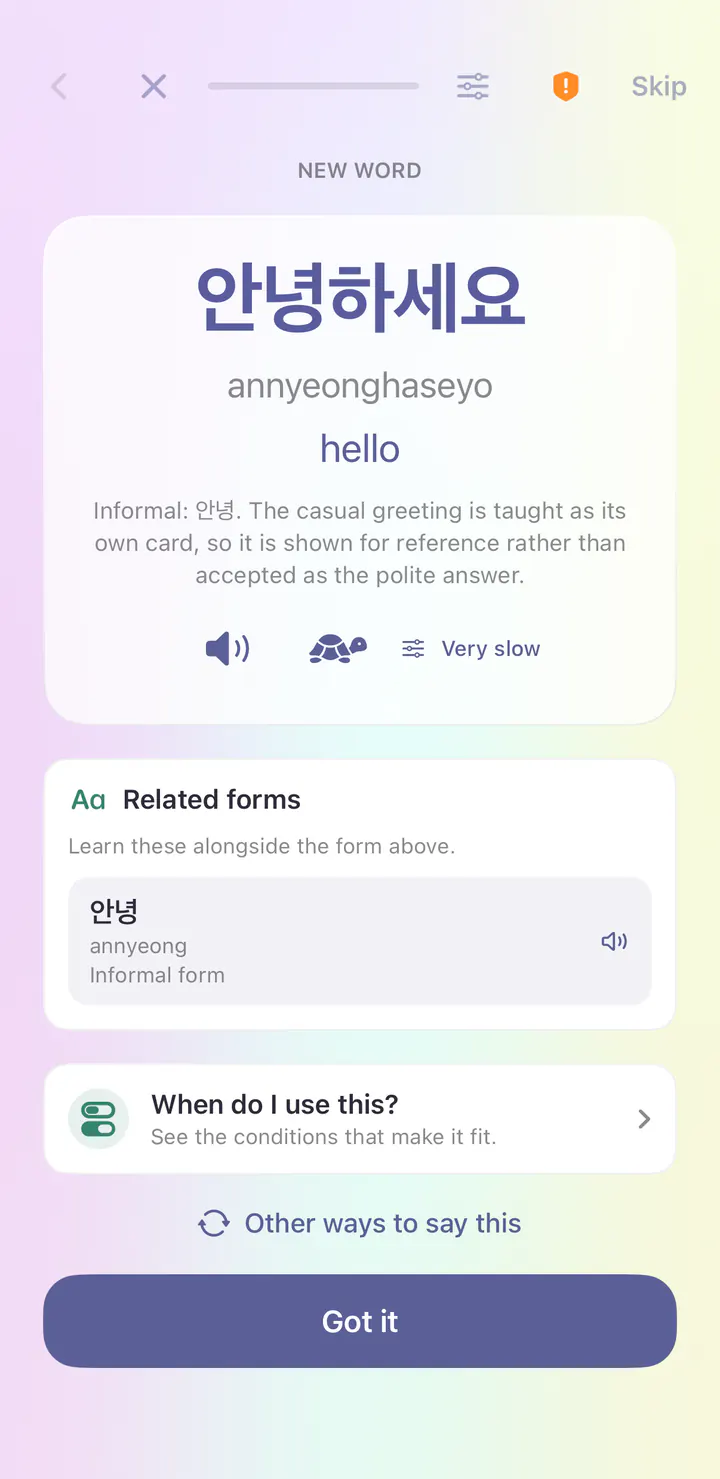
Every word gets its own card.
Your first word is 안녕하세요 (annyeonghaseyo), meaning hello. Each new word comes with its meaning and audio at normal or very slow speed, plus a reading in Latin letters.
Normal and very slow audio
A reading in Latin letters
Notes when a word needs them
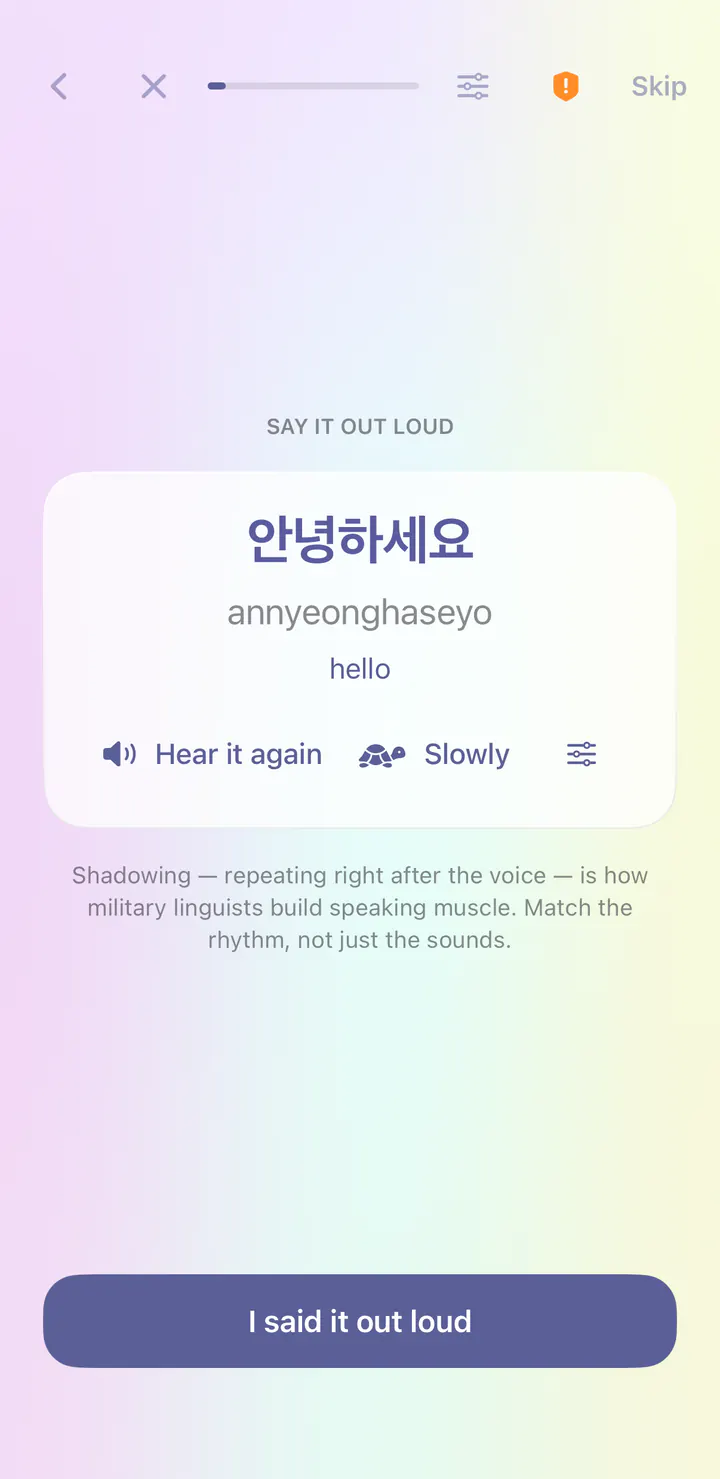
Then say it yourself.
Right after a new word, you repeat it after the voice. This is called shadowing, and it builds speaking habits from your very first lesson.
Hear it again, or slowly
Match the rhythm, not just the sounds
Tap when you have said it
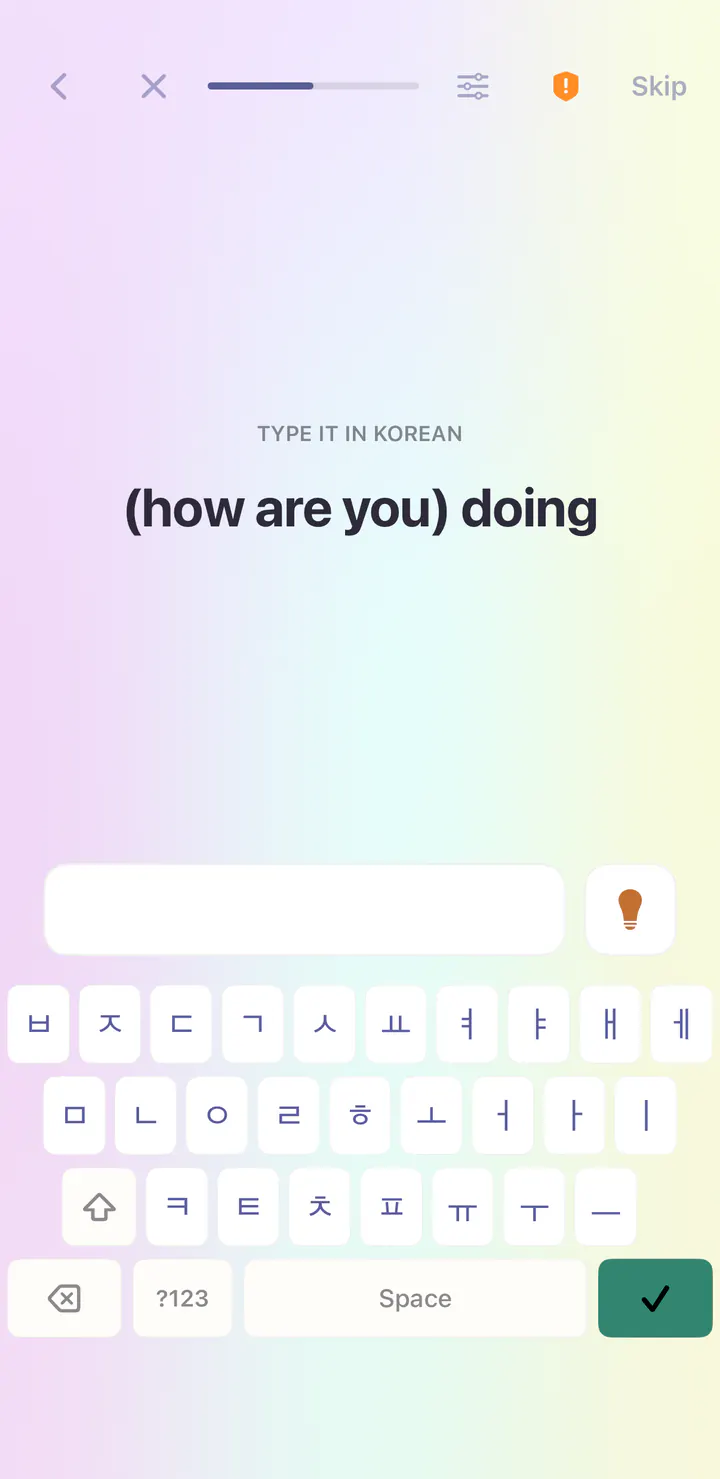
Write Korean from day one.
Typing steps bring their own keyboard, so you can write Korean before you add a keyboard to your phone.
A keyboard built for the lesson
A hint when you need one
Spelling practice as you learn
Writing and sounds, one tap away.
Explore the course’s writing and sound reference. Tap an entry to hear it.
Letters and sounds in one place
Tap any character to hear it
Free with every course
A first taste
Your first words in Korean.
Tap a word to hear it, at normal speed or slowly.
안녕하세요annyeonghaseyoHello
감사합니다gamsahamnidaThank you
안녕히 가세요annyeonghi gaseyoGoodbye
Your path
The first chapters of the Korean course.
The full course has 35 chapters. Your journey shows your progress in each one.
01Sounds & First Contact
02Numbers for Daily Life
03Food & First Transactions
04Everyday Conversation
05Time, Plans & Directions
06Sentence Foundations
Grammar Center
61 Korean grammar topics.
A few of the topics you can open anytime, before or after you reach them in a lesson.
Start Here: A Reading Order
Word Order: The Verb Comes Last
How a Korean Word Is Built: Stem, Ending, Particle
Nouns: No Gender, No Articles, Optional Plurals
Pronouns, and What Korean Leaves Out
This, That, and That Over There
Alphabets & sounds
Consonants (자음)
Tap an entry to hear it. Explore the writing and sound references included in this course.
In the app, start with three free lesson starts a day. Reference tools are included in free access. Loquus Plus adds unlimited lesson starts, section reviews, capstones and Arcade games.
14 languages. Your next step.
Your next chapter starts here.
Follow our guide to install Loquus and start learning.