Loquus has a separate Dutch course for Belgium, often described as Belgian Dutch or Flemish. It gives Belgian usage its own place while sharing the wider Dutch language. Explore words and expressions through lessons, audio, and reference tools, with progress kept separately from Netherlands Dutch.
Choose Dutch for Belgium when Belgian usage is what you want to focus on. Words and expressions can differ from those common in the Netherlands, even though much is shared. Use this course's Dictionary and Phrasebook to explore the wording in its own context.
02
Learn the shared sentence patterns
Articles, verb placement, and separable verbs are useful parts of Dutch to understand in Belgium too. Look up a question in Grammar Center and compare the examples. Keep the explanation close as you return to a phrase or practice the words you have already learned.
03
Leave room for local variation
Dutch in Belgium includes regional differences in sound and everyday speech. Listen to the available course audio and use it as one source of practice. When you encounter an unfamiliar expression elsewhere, check its context rather than expecting every speaker to use exactly the same wording.
35
Chapters on your journey
72
Grammar Center topics
57
Authored conversations
See it in the app
The Dutch (Belgium) course, on iPhone.
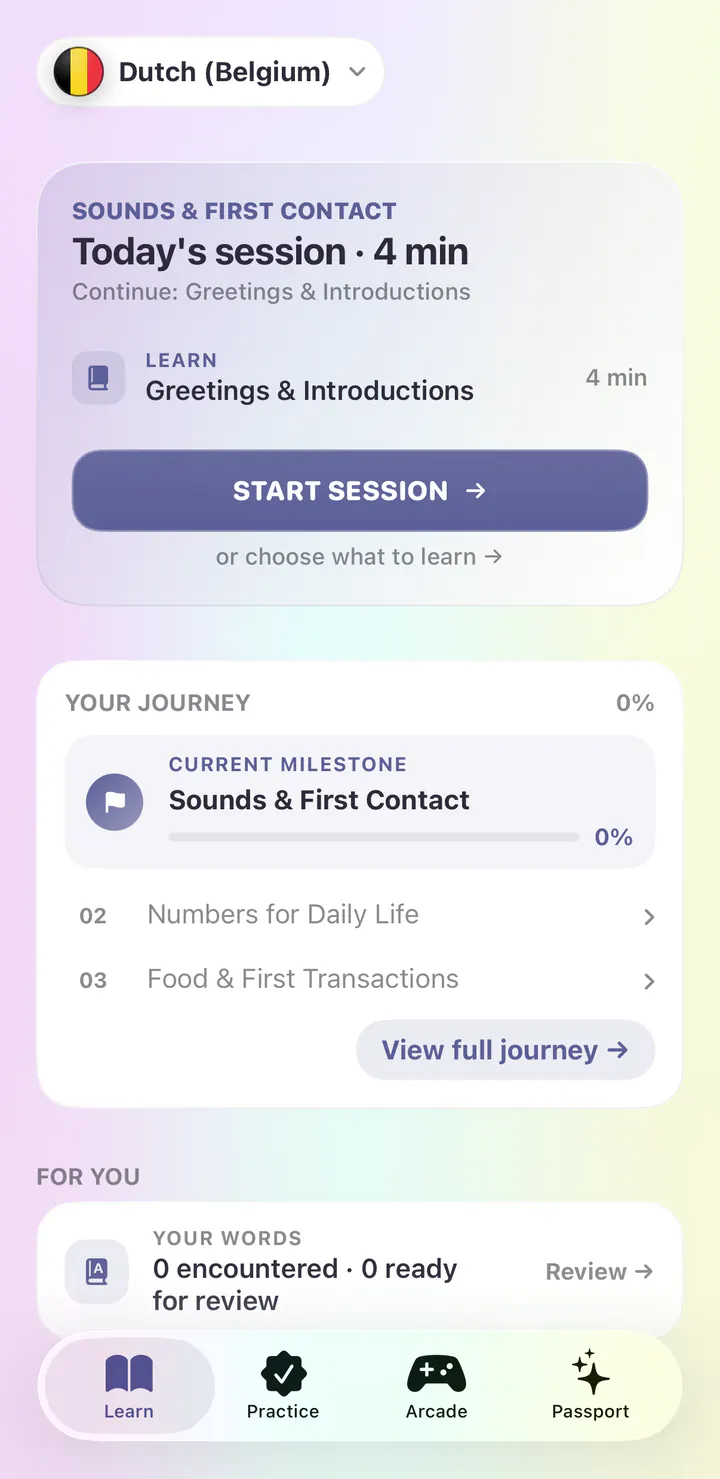
Real screens from the first day of the Dutch (Belgium) course in the iPhone app.
Your first session is ready.
Open the app and today’s session is waiting. The Dutch (Belgium) course begins with Sounds & First Contact, and the first lesson is Greetings & Introductions.
A short session, planned for you
Your journey and next milestone below
Or choose any lesson yourself
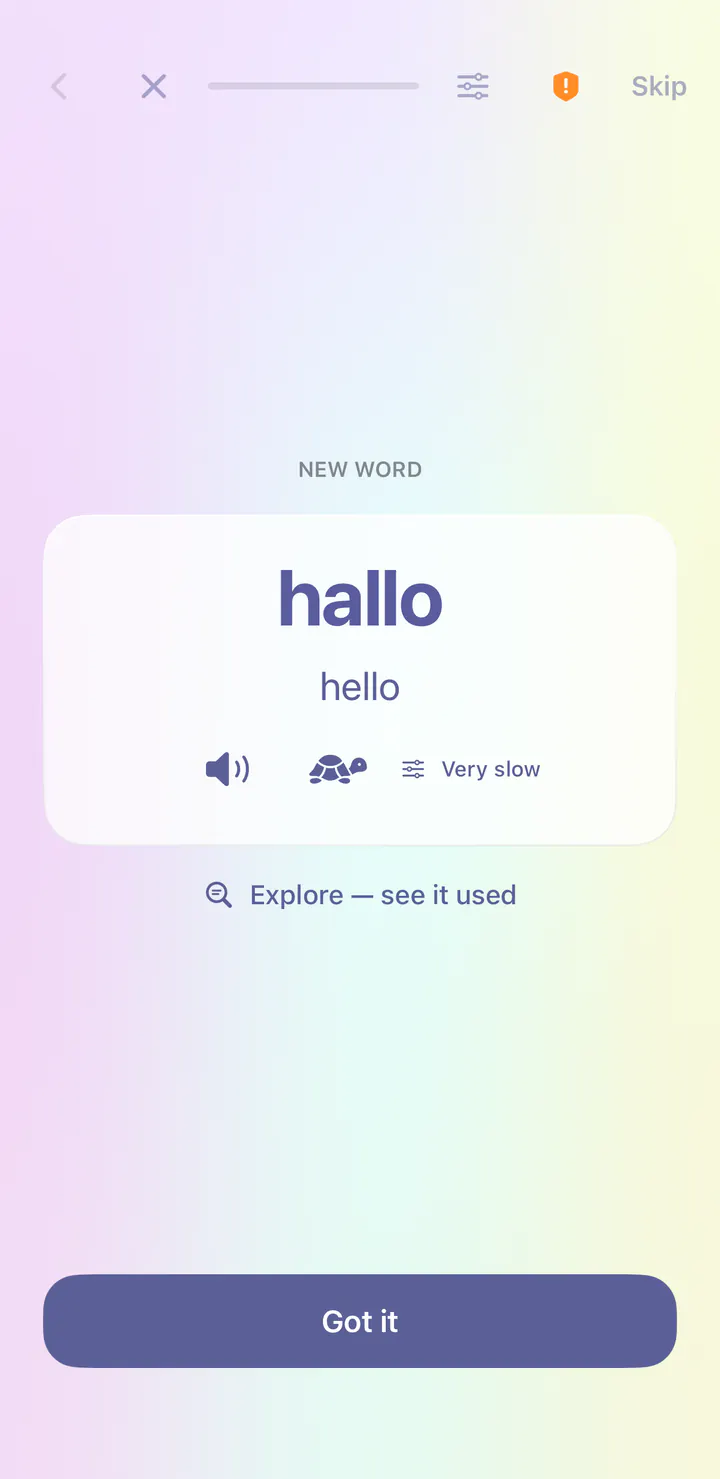
Every word gets its own card.
Your first word is hallo, meaning hello. Each new word comes with its meaning and audio at normal or very slow speed.
Normal and very slow audio
Notes when a word needs them
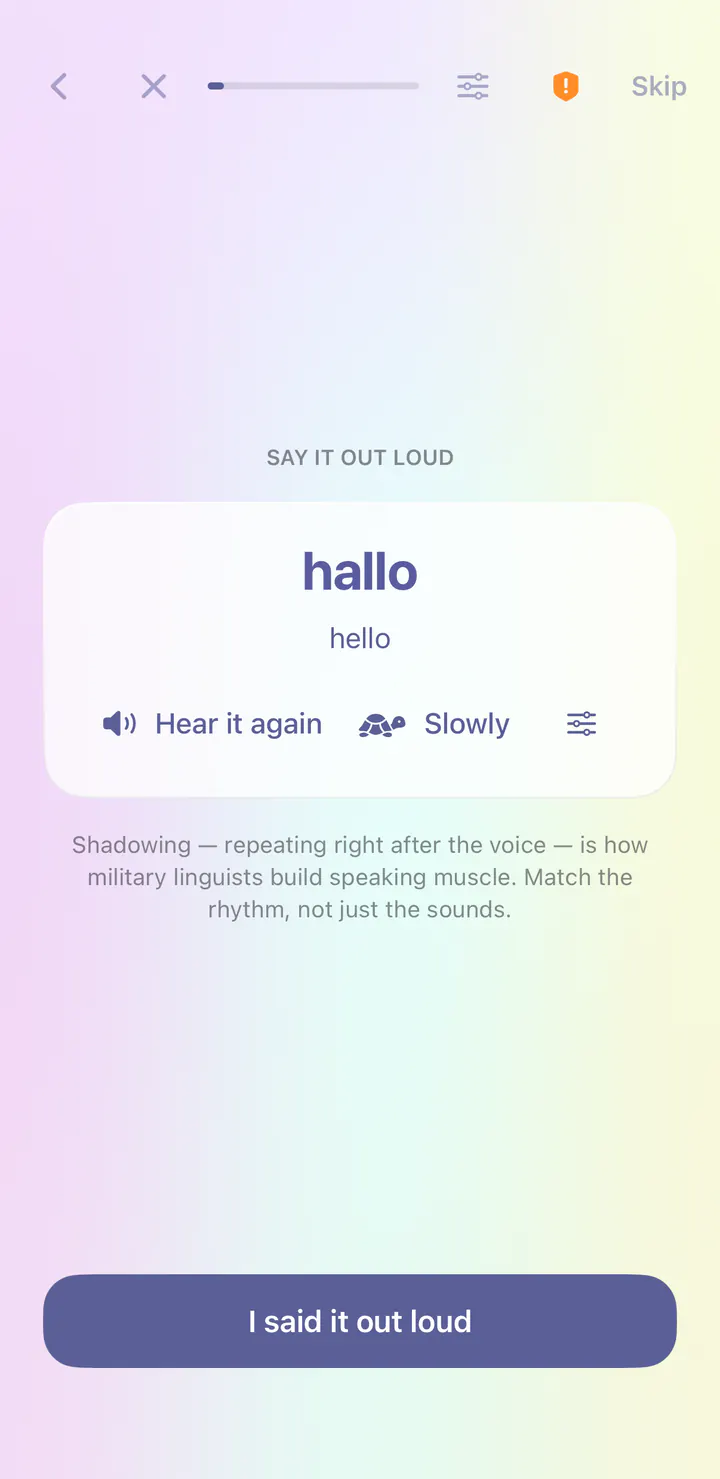
Then say it yourself.
Right after a new word, you repeat it after the voice. This is called shadowing, and it builds speaking habits from your very first lesson.
Hear it again, or slowly
Match the rhythm, not just the sounds
Tap when you have said it
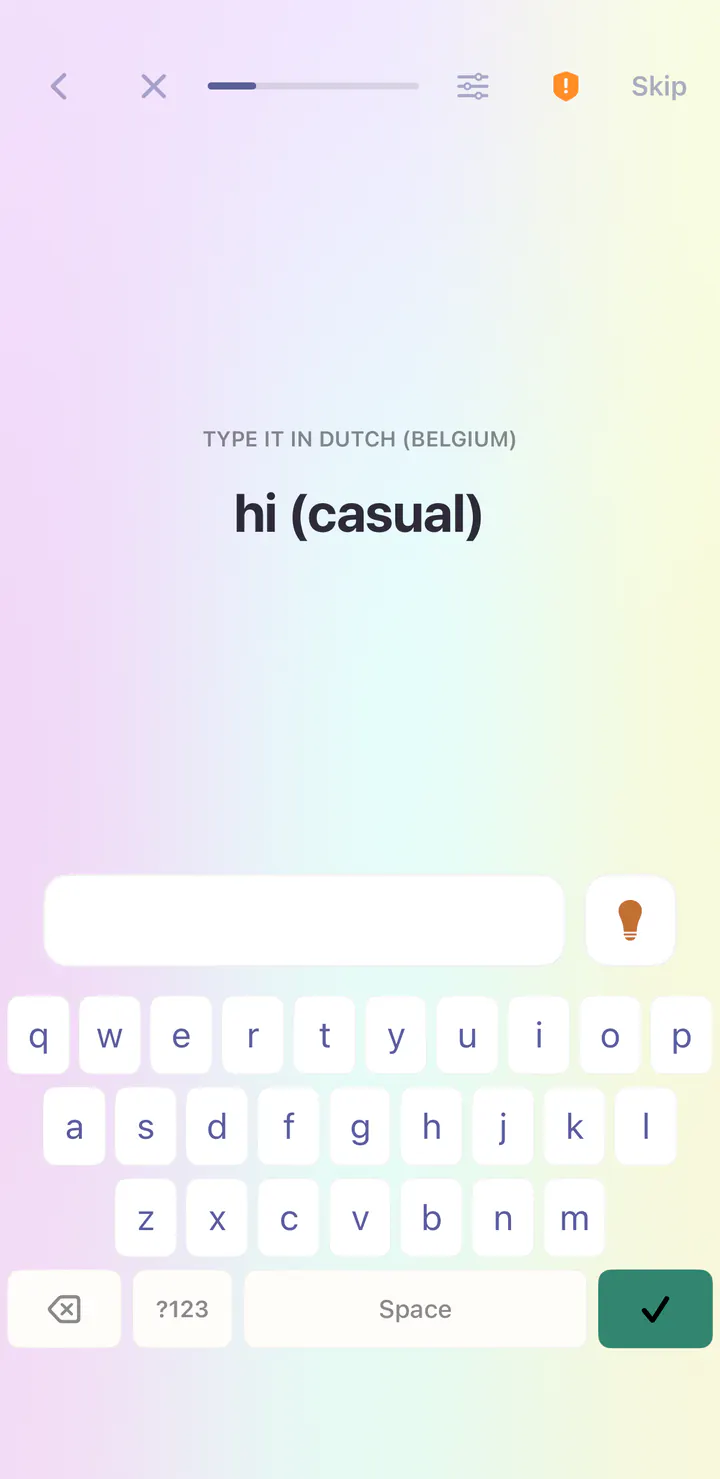
Write Dutch (Belgium) from day one.
Typing steps bring their own keyboard, so you can write Dutch (Belgium) before you add a keyboard to your phone.
A keyboard built for the lesson
A hint when you need one
Spelling practice as you learn
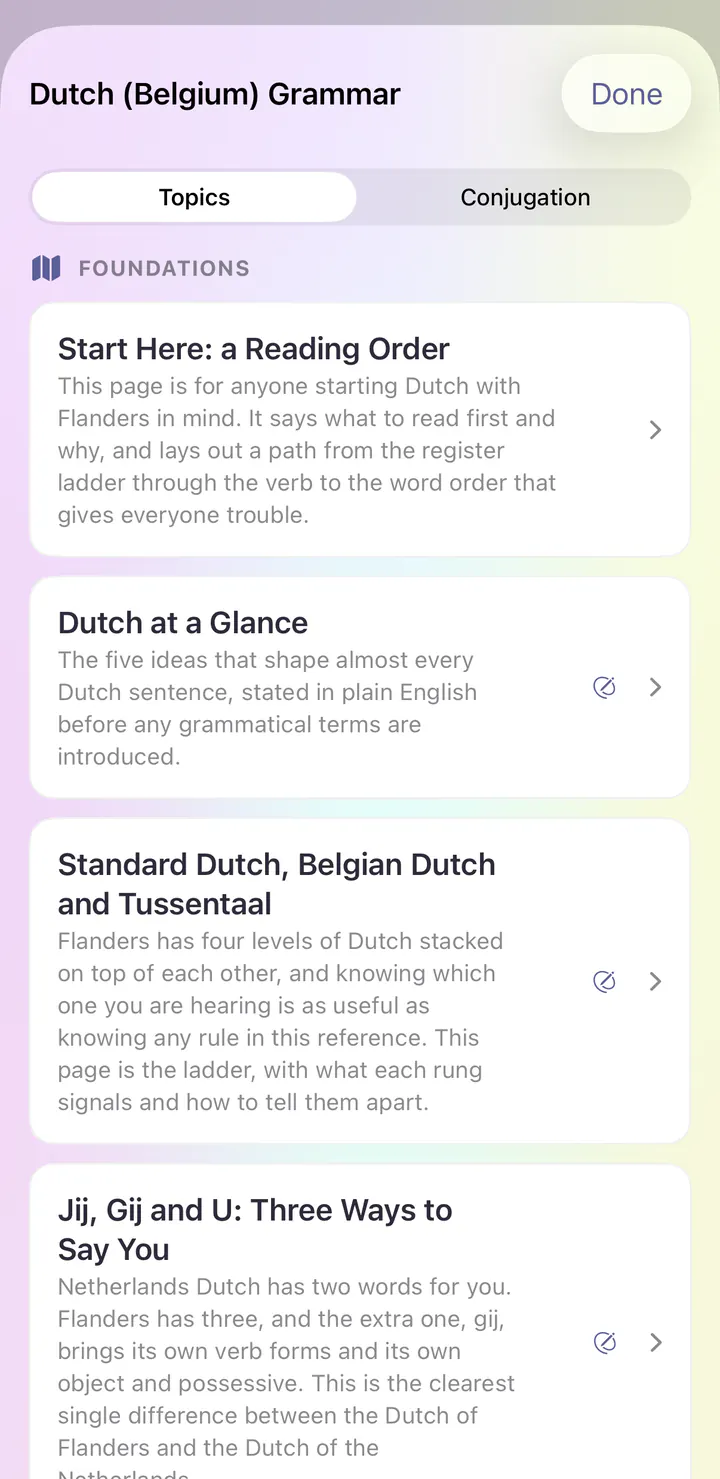
Grammar explained in plain language.
Grammar Center explains how Dutch (Belgium) works, with topics like Dutch at a Glance and Standard Dutch, Belgian Dutch and Tussentaal.
72 topics in the Dutch (Belgium) course
Open any topic, any time
Focused drills for each pattern
A first taste
Your first words in Dutch (Belgium).
Tap a word to hear it, at normal speed or slowly.
halloHello
dank jeThank you
alsjeblieftPlease
saluutGoodbye
Your path
The first chapters of the Dutch (Belgium) course.
The full course has 35 chapters. Your journey shows your progress in each one.
01Sounds & First Contact
02Numbers for Daily Life
03Food & First Transactions
04Everyday Conversation
05Time, Plans & Directions
06Sentence Foundations
Grammar Center
72 Dutch (Belgium) grammar topics.
A few of the topics you can open anytime, before or after you reach them in a lesson.
Start Here: a Reading Order
Dutch at a Glance
Standard Dutch, Belgian Dutch and Tussentaal
Jij, Gij and U: Three Ways to Say You
Greetings and Introducing Yourself
When You Do Not Understand
Alphabets & sounds
The alphabet
Tap an entry to hear it. Explore the writing and sound references included in this course.
In the app, start with three free lesson starts a day. Reference tools are included in free access. Loquus Plus adds unlimited lesson starts, section reviews, capstones and Arcade games.
14 languages. Your next step.
Your next chapter starts here.
Follow our guide to install Loquus and start learning.